Category: ZPHCA News

  • Parenting And Prevention of Sexual Exploitation and Abuse (PSEA) Training

    Parenting And Prevention of Sexual Exploitation and Abuse (PSEA) Training

    Parenting education has numerous advantages for parents, kids and families of persons living with disabilities. Such programs can assist parents in discovering practical solutions for enhancing their child’s abilities, controlling difficult habits and fostering their development. It is also of great importance that parents and other stakeholders are educated on sexual exploitation and abuse preventative measures that can be taken to safeguard children and adolescents with disabilities.

    For most families, parenting provides an ongoing source of happiness and joy as well as increased responsibility, anxiety and stress. Clearly, raising any child can be a difficult and emotional task for any parent, unfortunately, information pertaining to typical child development and childrearing strategies specific for parents with children with disabilities is very limited.

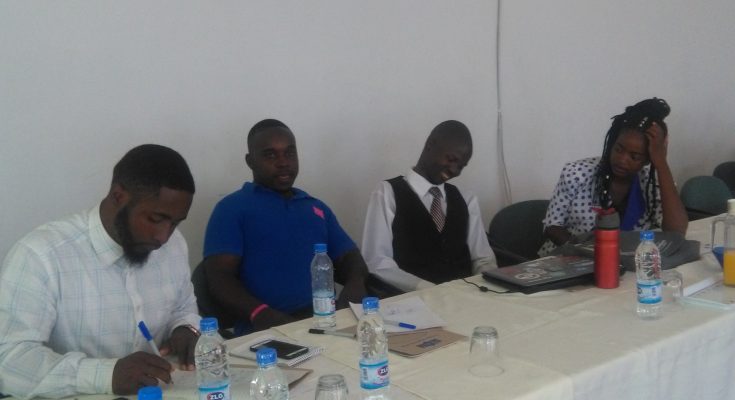
    Zimbabwe Parents of Handicapped Children Association (ZPHCA) conducted a disability inclusive Parenting and Prevention of Sexual Exploitation and Abuse (PSEA) training. The project was done through the program ” Building Capacity and Culture of Protection from all Forms of Violence, Abuse and Exploitation of Children and Adolescents with Disabilities (CAWDs).

    The objective of the training was to impart knowledge regarding disability inclusive parenting and to capacitate traditional leaders, DPOs, Faith-Based Organizations and Community based Organizations to facilitate case reporting, referral services and prevention of sexual exploitation and abuse of Children and adolescents with disabilities.

    In attendance were representatives from Department of Social Development, Zvataida-UMP Rural District Council, Ministry of Youth, Traditional leaders, Faith based Organizations, Zvatinoda Special Needs and Care Club and other Community-Based Organizations. The training was a great success and our team managed to establish significant positive impact through the interactive and inclusive training.

  • Training of community resource persons in Zhombe, Redcliff and Kwekwe on the Disability Inclusive Parenting Toolkit

    Training of community resource persons in Zhombe, Redcliff and Kwekwe on the Disability Inclusive Parenting Toolkit

    The Zimbabwe Parents for Handicapped Children Association (ZPHCA) managed to create a Disability Inclusive Parenting Toolkit, the toolkit provided practical information on how to plan, coordinate and implement inclusive parenting that address the needs and priorities of children with disabilities.

    The use of evidence-based interventions can be increased via a toolkit, which is a collection of flexible materials to guide and ease implementation. The majority of accessible toolkits offer materials regarding the intervention but do not include instructions for customization to various contexts or implementation support tactics. Generally, toolkits are designed to help users implement more seamlessly, thereby bridging or reducing the gap between implementation and practice. They provide a blueprint for what to do, when to do it and how to do it.

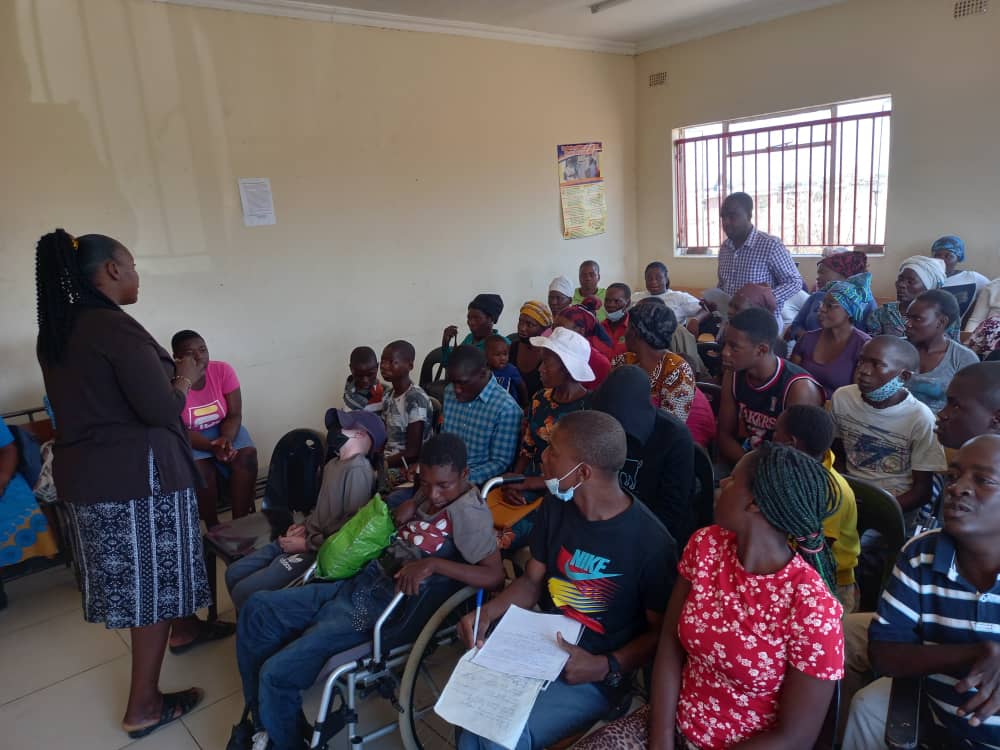
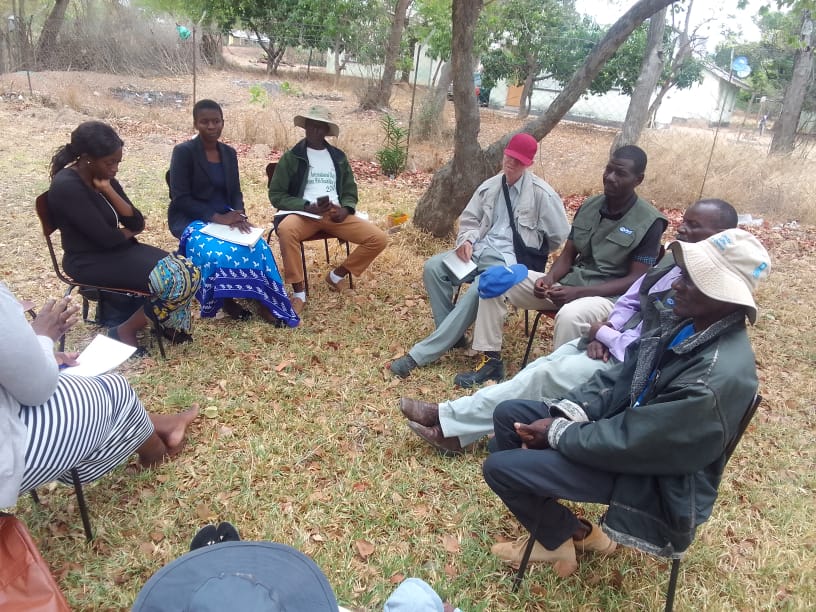
    The Zimbabwe Parents Handicapped Children Association team managed to train community resource persons in Zhombe, Redcliff and Kwekwe on the Disability Inclusive Parenting Toolkit. The toolkit will include a set of short guidance, practical tools and capacity-building packages that provide operational guidance on including community resource persons on the disability parenting toolkit.

    From the training, community resource persons managed understand what the Disability Inclusive Parenting Toolkit is, what it does, how to use it and how it is going to make positive change to children with disabilities. Persons in Zhombe, Redcliff and Kwekwe were extremely grateful and delighted of the training, hence they requested more programs and engagements from the Zimbabwe Parents Handicapped Children Association team.

  • ZPHCA Commemorates 16 Days of Activism Against Gender Based Violence

    ZPHCA Commemorates 16 Days of Activism Against Gender Based Violence

    By 2030, UNFPA pledges to stop all types of violence against women and girls as well as other harmful behaviors. Every year, the 16 Days of Activism campaign offers a significant platform for drawing attention to our shared mission to stop violence against women and girls. This year, under the UNiTE theme, “Activism to End Violence against Women & Girls”, UNFPA will focus on making online spaces safe by highlighting digital violence and all forms of gender-based violence (GBV) facilitated by technology.

    They will also emphasize new approaches to GBV prevention and response strategies as well as the ability of activism to stop violence in both the physical and digital spheres. UNFPA seeks to advance its mission of ensuring that women and girls can exercise their unalienable right to feel safe, prosper and flourish wherever they are by elevating the voices of changemakers.

    Zimbabwe Parents of Handicapped Children Association (ZPHCA) joined the world in commemorating 16 days of activism against GBV. For us this year’s theme was Unite – activism to end violence against women and girls with disabilities. Girls with disabilities from ZPHCA prepared advocacy messages on violence against women and girls with disabilities and recorded videos sharing their messages.

    Due to the intersection of gender and disability, women and girls with disabilities confront unique challenges in obtaining their rights. They endure denial of their dignity and autonomy, as well as prejudice, exclusion and isolation all too frequently, both in public and within their own families. Hence through the stated 2022 theme we want to unite as all stakeholders to end violence against women and girls living with disabilities.

  • TRAINING OF COMMUNITY RESOURCE PERSONS

    TRAINING OF COMMUNITY RESOURCE PERSONS

    Training of community resource persons in Zhombe,Redcliff and Kwekwe on the Disability Inclusive Parenting Toolkit

  • Families of children with disabilities receive food hampers from ZPHCA

    Families of children with disabilities receive food hampers from ZPHCA

    Covid-19 pandemic has threatened the livelihood of persons with disabilities in Zimbabwe due to the limited socio-economic activities around the country. Families of children with disabilities are unable to go to work due to lockdown restrictions which are mend to reduce the spread of the covid-19. Most parents of children with disabilities rely of informal trade but due to the lockdown there were unable to do their daily business thereby causing food insecurity to families of children with disabilities.

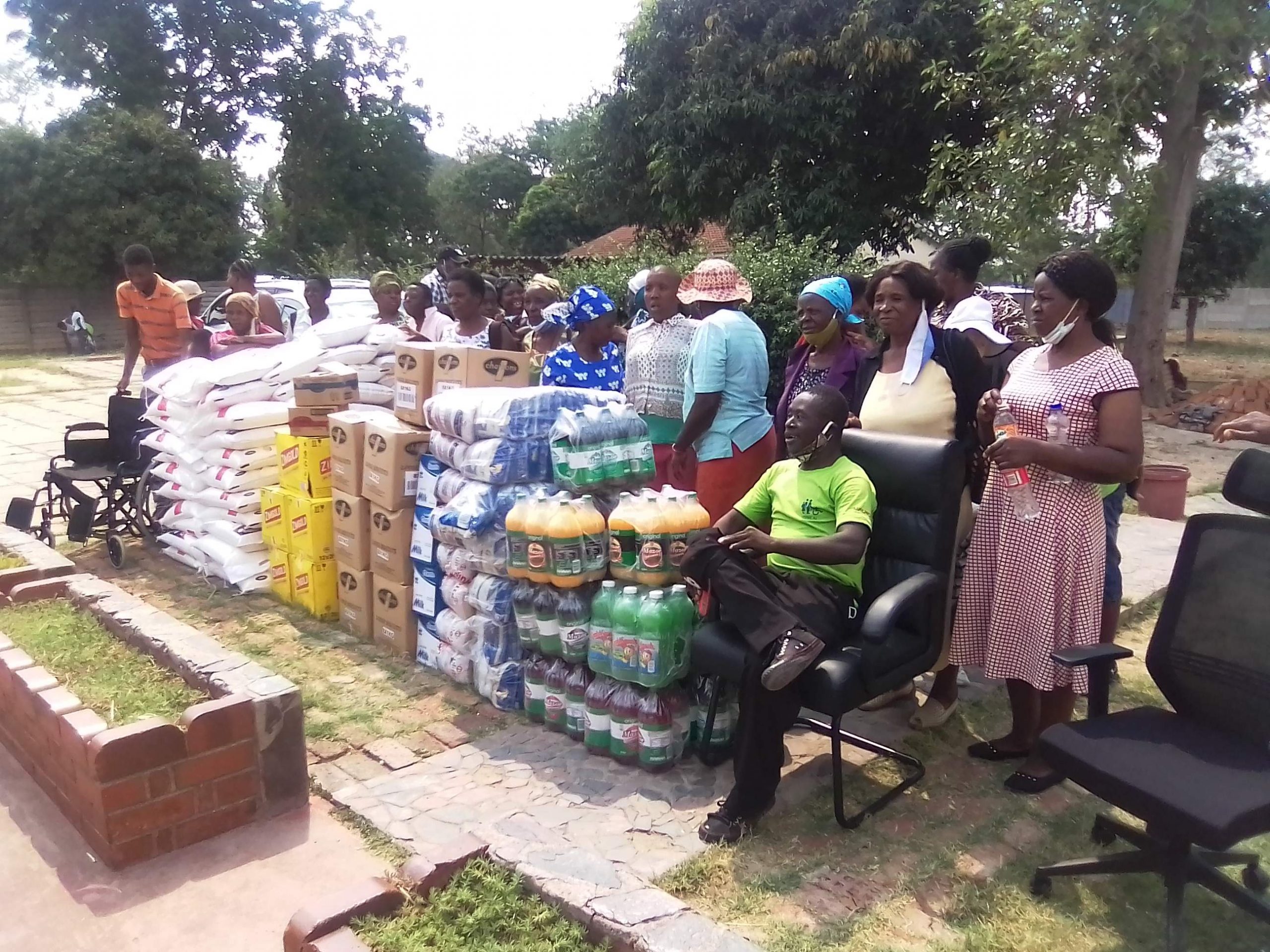
    In response to the challenges of food insecurity being faced by families with children with disabilities, the Zimbabwe Parents of Handicapped Children Association distributed food hampers to its members from different support groups around and outside Harare province who were in critical needy of the food aid strengthening action towards the achievement of Sustainable Development Goals (SDGs) number one, two and ten.


  • International Women’s Day Commemoration

    International Women’s Day Commemoration

    Zimbabwe Parents of Handicapped Children Association joined the world in commemorating the International Women’s Day. This year, the theme for International Women’s Day, Women in leadership: Achieving an equal future in a Covid-19 world”.

    Women should be given equal opportunity in accessing quality education, health services and in decision making. Women’s full and effective participation and leadership in of all areas of life drives progress for everyone. Yet, women are still underrepresented in public life and decision-making. Due to the lockdown caused by the Covid-19 pandemic there has been an increase in cases of gender-based violence being triggered mostly with economic hardship due to limited social, economic and political activities in the Country and at a global level. The major challenge that worsened the status of women in the pandemic is the underlying social status quo which excludes them from mainstream development, participation and leadership. their rights remain unrecognised in the public and private sphere.

    In line with the 2021 theme, ZPHCA raised awareness campaigns through various forms to ensure that all young women and children with disabilities become fully aware of their rights and that they become self-advocates.


    The above picture shows young women and girls with disabilities holding pictures which shows that all women should have equal opportunity in accessing all basic services. Women should be given equal opportunity as men to acquire any job of their choice since they are able to do the work that a man can do thereby promoting equality in society.


  • ZPHCA ASSISTS FAMILIES OF CHILDREN WITH DISABILITIES

    ZPHCA ASSISTS FAMILIES OF CHILDREN WITH DISABILITIES

    Zimbabwe Parents of Handicapped Children Association through the partnership with Misereor managed to procurer sanitary wear for girls with disabilities and food aid for families of children with disabilities  who are most affected by the COVID-19 pandemic.

    Beneficiaries were drawn from the 23 Support Groups that are working with ZPHCA across Harare Province. Most of the families of the beneficiaries sustain at a hand to mouth income and have been strained or have been alienated from economic activity due to Corona Virus.

    Beneficiaries receiving food aid.

    The outbreak has worsened the household food security status for families of children with disabilities. Small scale trade and the informal sector have been closed due to lock down restrictions. This has been a big blow to families of children with disabilities as they mostly rely on small scale trade for subsistence.

    Girls have a double burden not only for food but also sanitary needs. The economy has been a major challenge for accessing proper sanitary needs thus the intervention by the organisation to the girls with disabilities.

    some of the beneficiaries of the sanitary wear.

  • ZPHCA, GOVERNMENT CELEBRATES INTERNATIONAL DAY FOR PWDS

    ZPHCA, GOVERNMENT CELEBRATES INTERNATIONAL DAY FOR PWDS

    The Zimbabwe Parents of Handicapped Children Association (ZPHCA) together with other organisations presented their queries to the Government during the belated celebrations of the International Day for Persons with Disabilities.

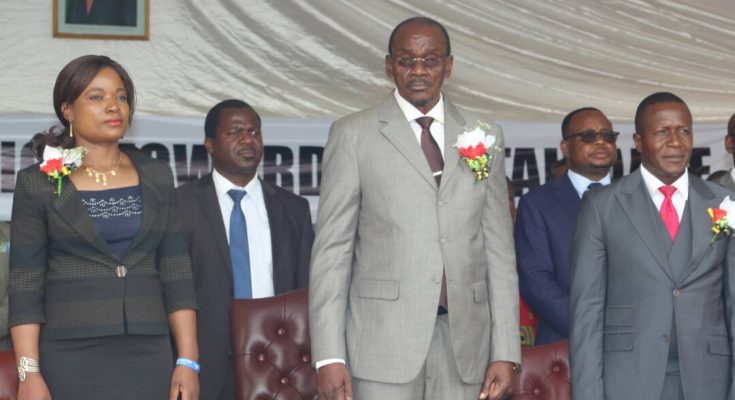
    As the promulgation of the Disabled Persons Act (Chapter 17; 01) of 1992 attests to Government’s commitment to promote the capabilities and advance the capacities of Persons with Disabilities (PWDs), the belated commemorations were held on the 26th of March 2018 at Mushawedu Community Centre in Caledonia, Phase 3 (Ward 25) Goromonzi District, Mashonaland East Province. The Acting President of Zimbabwe Kembo Mohadi, graced the occasion.

    The celebrations were run under the theme: “Transformation towards Sustainable and Resilient Society for All.”

    Through a short play, ZPCHA presented the challenges it was encountering in its day-to-day lives to the Acting President of Zimbabwe Kembo Mohadi who was representing the President Emmerson Mnangagwa.

    Parents of children with disabilities said they were not being treated fairly in the different communities they reside in. ZPHCA members pointed out that they were facing stigmatisation since people treat them with negativity.

    The organisation revealed that the day was not only supposed to be celebrated but to be an opportunity for their children who are handicapped to be recognised so that they feel warmth and a reason to live.

    “Government must take measures and ensure that our children access quality education and health services. They need support for them to be recognised in communities. The life which we are going through in as much as looking after these children is not easy. I’m pleading to the Government of Zimbabwe to work tirelessly to improve our children’s life. Us as parents of these children, it will be better for us if Government extend projects to us so that can sustain our families,” said Theresa Makwara, the ZPCHA Coordinator.

    The parents who are members of ZPCHA said when they travel in kombis, they are often harassed. At clinics, the nurses do not understand the condition and hardships faced by their children. In homes for those who rent, the landlords are also failing to treat them with positivity. Therefore, they raised their pleas to the President for disability inclusive policies and transformation.

    In his speech which was read on his behalf by the Acting President Kembo Mohadi, President Mnangagwa said the celebrations were an important tool for promoting the rights of PWDs through increasing awareness of disability issues and the gains to be derived from the integration of PWDs in every aspect of life.

    He said the theme was vibrant and prompt to everyone in line with the Zimbabwe Agenda for Sustainable Social and Economic Transformation (ZIMASSET). He urged all organisations which represent PWDs to join hands and work towards the same goal of development.

    “The country’s economic blue print, ZIMASSET calls for all of us to ensure that as we implement our cluster of Social Services and Poverty Eradication, we mainstream disability, pursue the inclusive approach and avoid discrimination. Under this cluster the Government of Zimbabwe has dedicated in social services and social protection with special attention to improving the lives of PWDs.

    “Persons with Disabilities, as both beneficiaries and agents of change can fast track the process towards inclusive and sustainable development whilst promoting resilient society for all Governments, PWDs and their representative organisations, academic institutions and the private sector need to work as team to achieve the Sustainable Development goals,” he said.

    Joshua Malinga, the Special Advisor to the President on Disability issues reiterated that a paradigm shift should be taken in which PWDs were treated. He said disability was a societal issue henceforth, communities should take action to bring change and desist from leaving out PWDs as this was leading to underdevelopment of the country.

    The President made it clear that inclusion of PWDs start at home where the family, community and the nation at large offers protection, care and love without discrimination.

    The Government of Zimbabwe continues in its provision of services which include provision of vocational training fees and loans under a revolving loan fund facility, availing of Administrative and Per Capita Grants to institutions supporting PWDs, implementation of harmonised Social Cash transfers and food mitigation for vulnerable groups among other provisions.

    Petronella Kagonye, the minister of Labour and Social Welfare, with other ministers also attended the day to celebrate with PWDs as well as presenting their solidarity speeches concerning on how lives of these people can be upgraded.

    The day’s commemorations also saw the recognition of the achievements of the local Mushawedu Housing Cooperative which is comprised of PWDs and their families.
  • CHILDREN WITH SEVERE MULTIPLE DISABILITIES ENJOY A RARE TREAT FROM ZPHCA

    CHILDREN WITH SEVERE MULTIPLE DISABILITIES ENJOY A RARE TREAT FROM ZPHCA

    By Byron Mutingwende

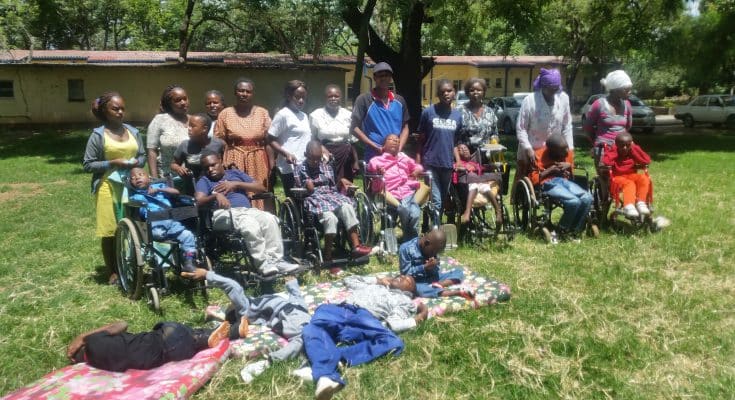
    The Zimbabwe Parents of Handicapped Children Association (ZPHCA) gave children with disabilities a rare treat when it threw a belated Christmas party for them and donated some goodies.

    “Some of these do not appear in public. Our friends from China and Mimosa Mining Company donated some groceries, clothes and foodstuffs as well as some wheelchairs for children with severe multiple disabilities. Today we throw a belated party to these vulnerable children as we raise awareness of the challenges they face in the community,” said Theresa Makwara, the ZPHCA Coordinator.

    Makwara said parents of children with disabilities face a plethora of challenges and urged society to recognise that these are part of needy groups which should be remembered and recognised.

    “We should fight self-stigma whereby some of the parents hide their children from the public glare. Some of these children pray for the development of the country. They want accessible, inclusive infrastructure,” she said.

    Clayton Mbombo (37), brother to Tino who stays with their mother said his youngster survives through taking tablets.

    “At times we don’t have money to buy the tablets he takes daily for survival. Without the tablets, his life will be at risk. He is 19 years old but looks like a 10-year-old.

    “We appeal for the government to build more special schools like Jairos Jiri. He can’t sit or walk on his own. He can’t sit upright in a chair. The new government should work towards improving the lives of these children with disabilities. I am thankful to ZPHCA for organising an event where the children mix and mingle with other members of the community,” Mbombo said.

    Florence Ngondi (36) is mother to Jeffrey Chimombe. Jeffrey was born with cerebral pulse. I realised it when he was seven months old. We face challenges in getting places to lodge.

    “I don’t have money to send him to school. Even though I took his issue to the Social Welfare Department, he was never registered to become a beneficiary of maize and rice rations. He doesn’t have a wheelchair yet he can’t sit on his own. He wears diapers yet he is now 11 years old. We don’t have a centre for children with disabilities in area of Zengeza 4. We hold our meetings under the tree at Hutano Centre.”

    Thabani Dube’s has a 10-year-old son who was enrolled at Jairos Jiri for early child development (ECD) and was referred to Tose Special School which costs $400 per term.

    “I have failed to raise the required fees for my child to do Grade 1 at the special school because I have two other children from my mentally-challenged sister. I am unemployed and depend on my husband who is a vendor so the money is inadequate for me to send the children to school,” Dube said.

    She also revealed that she faces challenges using public transport because the wheelchair is considered as luggage and bus crews charge an extra fare for it. She urged the new government to intervene to reduce the exorbitant fees charged by special schools.

    “Our request is for well-wishers to start income-generating projects for the parents of children with disabilities, provide us with clothing and mattresses for the children,” Dube added.

    Theresa Makwara, the ZPHCA Coordinator said her organisation received five wheelchairs from Mimosa Mining Company as well as an assortment of various goods like shoes, satchels and groceries including maize-meal, rice, sugar, kapenta, cooking oil and peanut butter.


    Children with severe multiple disabilities pose with shoes donated by the Chinese

    ZPHCA has got more than 10000 members countrywide with over a 1000 of these found in the Greater Harare area. The organisation is semi-autonomous and encourages its members to engage in income-generating activities.

    The ZPHCA leadership thanked Miseror, their perennial funders, for their support over the years that has seen parents being trained on lobbying and advocacy as well as income generating projects. The support has also included awareness raising on the Sustainable Development Goals (SDGs).

  • ADRIAN MUNYORO AMONG ZIMBABWEAN YOUTHS FOR BULEMAZI

    ADRIAN MUNYORO AMONG ZIMBABWEAN YOUTHS FOR BULEMAZI

    Following his proven leadership skills, Adrian Munyoro, the Chairman of the Young Voices, a department of Leonard Cheshire Disability Zimbabwe (LCDZ) was chosen to participate in a project started in 2017 by FK Norway in collaboration with Parents of Disabled Children Association of Malawi (PODCAM) and the Zimbabwe Parents of Handicapped Children Association (ZPHCA).

    The project dubbed “Building Leadership in Youth with Disabilities in Malawi and Zimbabwe”and codenamed BULEMAZI is aiming at engaging youthS to take leadership and work towards justice and inclusion for people with disabilities.

    A group of eight youth, one assistant and one sign interpreter travel in Malawi and Zimbabwe to secure the safety, inclusion and justice of people with disabilities in their societies. The FK participants have different varieties of disabilities themselves, but when they work together there is nothing they can’t handle.

    From the 21st to the 25th of January 2018, 19 countries gathered at Speke Resort Munyonyo in Kampala Uganda for an annual youth camp FK Norway hosts for its partners every year. Young people from all over Africa come to learn, experience and share information on youth leadership and crucial issues that are significant to theIr journey of being leaders, role models and ambassadors of change during the exchange programmes.

    Among the the 19 countries were Zimbabwean youths with disabilities representing ZPHCA namely Adrian Munyoro, Bessie Momberume, Shingirai Muchena and Anna Banet, putting youths with disabilities on the map.

    “I am part of the eight participants, four from Zimbabwe together with the other four from Malawi, who, right after the youth camp in Uganda, underwent a preparatory course in Malawi from the 26th of January to the 13th of February 2018.

    “Thereafter, we will start our advocacy work for the next three moths and later in May this year the participants will be coming to Zimbabwe together with the Malawian nationalities to continue with the advocacy work and create change in our society in terms of recognising and respecting disability rights and policies, people’s attitudes, perceptions and behaviours towards disability, and give leadership positions to PWDs. The main aim of the actives that are lined up for this programme is to create an equal society for all,” Munyoro said.
    The FK Norway’s programme grooms and develops young leaders, increases youth participation in their societies and strengthen regional and international cooperation between civil society organisation regardless of their colour, race, nationality, gender and religion.