Category: ZPHCA News

  • HIGHLIGHTING CHALLENGES OF PWDS TOWARDS SUSTAINABLE AND RESILIENT SOCIETY

    HIGHLIGHTING CHALLENGES OF PWDS TOWARDS SUSTAINABLE AND RESILIENT SOCIETY

    By Byron Mutingwende

    Caregivers and members of the Zimbabwe Parents of Handicapped Children Association (ZPHCA) held a meeting to highlight challenges faced by persons with disabilities and proffer solutions that lead to sustainable and resilient solutions to this marginalised group.

    Speaking at a belated commemorative workshop to observe the International Day of Persons with Disabilities in Harare on Saturday 16 December 2017, Theresa Makwara, the ZPHCA Coordinator appealed to the government to ensure schools had facilities that are accessible to children with disabilities.

    The appeal holds water because there are persons with disabilities (PWDs) that find it hard to pursue education because of a number of reasons.

    “Facilities at learning institutions should be accessible and friendly to the nature of persons with various disabilities. The unavailability of suitable facilities has disadvantaged and disenfranchised children with disabilities from pursuing further education regardless of how intelligent they may be,” Makwara said.

    Tinashe Mashumba (21) a young man who can neither use his hands nor walk and is wheelchair-bound recounted a harrowing tale of how he failed to realise his dream of becoming a lawyer when circumstances forced him out of school after he had only finished primary education.

    “I finished my Grade 7 at Jairos Jiri in Southerton. I tried to enrol at Danhiko but I was denied a vacancy because they insisted that I need special supervision from a caregiver since I write with my leg. I also tried to enrol at Jairos Jiri in Bulawayo but they shut their door on me citing the same reasons. My dream of becoming a lawyer has been shattered,” Mashumba said.

    Another teenage girl who cannot be named said she faces difficulties during her menstrual cycle and requires assistance in using sanitary pads. She also bemoaned the high prices of sanitary ware as out of reach of many girls with disabilities. She appealed for assistance to further develop the talents of those good at sewing, knitting and craftwork.

    Mike Saijeni (17) is a talented wheelchair basketball player and athlete. He is also a singer and music composer. However, the lack of resources is limiting his aspirations.

    “I have recorded several songs at First Choice Studios in Chitungwiza. When I took my music to critics, they said there is need for me to improve on the sound and I am appealing for assistance to record at established studious that produce quality sound. For me to develop my basketball and athletics talents, I need special basketball and athletics wheelchairs so I would be able to compete in Paralympics in the future,” Saijeni said.

    Trissure Chizanga, a sign language interpreter said those hard of hearing and speech face challenges at home, in the community and at school because there is a communication barrier arising out of the fact that society does not understand sign language.

    “At school, most teachers don’t have knowledge of sign language. Worldwide, sign language is not standardised hence the deaf won’t understand each other since the signs differ from one area to another. The way a boy is perceived in sign language is different from one locality to another. This then affects the type of sign to be used,” Chizanga said.

    She urged the deaf worldwide to be united work together to come up with a unified, universally accepted sign language. The communication barrier often results in the deaf to feel neglected and end up with low self-esteem.

    “For an inclusive education, I urge all training institutions to have a component of special education. We need an Act of Parliament that compels the teaching of sign language in all schools. Exams for the deaf should be set in sign language which they understand better,” Chizanga added.

    According to the Division for Social Policy and Development Disability of the United Nations, the International Day of Persons with Disabilities was proclaimed by the United Nations General Assembly resolution 47/3 in 1992. It aims to promote the rights and well-being of persons with disabilities in all spheres of society and development, and to increase awareness of on the situation of persons with disabilities in every aspect of political, social, economic and cultural life.

    Building on many decades of UN’s work in the field of disability, the Convention on the Rights of Persons with Disabilities, adopted in 2006, has further advanced the rights and well-being of persons with disabilities in the implementation of the 2030 Agenda for Sustainable Development and other international development frameworks, such as the Sendai Framework for Disaster Risk Reduction, the Charter on Inclusion of Persons with Disabilities in Humanitarian Action, the New Urban Agenda, and the Addis Ababa Action Agenda on Financing for Development.

    The theme for 2017 IDPD is “Transformation towards sustainable and resilient society for all”.

    The 2030 Agenda pledges to “leave no one behind”. Persons with disabilities, as both beneficiaries and agents of change, can fast track the process towards inclusive and sustainable development and promote resilient society for all, including in the context of disaster risk reduction and humanitarian action, and urban development. Governments, persons with disabilities and their representative organisations, academic institutions and the private sector need to work as a “team” to achieve the Sustainable Development Goals (SDGs).
  • GRASSROOTS WOMEN MOTHERS OF CHILDREN WITH DISABILITY GRAPPLE WITH ADVERSE EFFECTS OF CLIMATE CHANGE

    GRASSROOTS WOMEN MOTHERS OF CHILDREN WITH DISABILITY GRAPPLE WITH ADVERSE EFFECTS OF CLIMATE CHANGE

    By Byron Mutingwende

    The Global Community is living no stone unturned in their endeavour to develop sustainable community responsive strategies to ensure adaptability and resilience in the wake of extreme hunger and severe poverty. Zimbabwe Parents of the Handicapped Children joined the Global Community in making frantic efforts to ensure grassroots women particularly mothers of children living with disabilities address impacts of climate change-induced food insecurity in the Greater Harare Province of Zimbabwe.

    Climate Change is the current global leading challenge outside poverty with scholars, developmental agencies, civil societies, national governments and research Institutions being preoccupied in making efforts to find the lasting sustainable solution to the phenomenon.

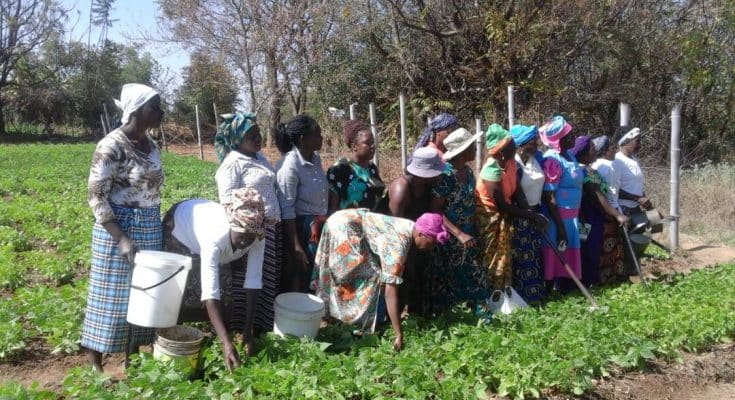
    Speaking to Spiked Online Media during a site visit to one of the site projects in Domboshava, Theresa Makwara, the Coordinator of the Zimbabwe Parents of the Handicapped Children Association said with financial support from Huairou Commission her organisation identified 200 grassroots women affected by climate change in the Greater Harare Province of Zimbabwe for the Resilience Building Project Implementation.

    “The Project was implemented in line with the ZPHCA Resilience Building Model, which is an amalgamation of tried and tested grassroots women climate change resilience building practical solutions. The 200 grassroots women were involved in the Resilience Building Projects and great results are emerging from the field of implementation,” Makwara said.

    A number of achievements were reported and noted. At the moment, 100 grassroots women benefited from the Gardening Input Support Programme. Under this program, grassroots women were given various vegetable seeds, fertilisers, water pumps, spraying chemicals and other gardening tools amongst others.

    On the other hand, 10 Grassroots Women Internal Savings and Credit Scheme/Revolving Fund Groups were established and supported with an initial capital of $300 per group while 66 Grassroots women Leaders from Harare, Chitungwiza, Epworth and Domboshawa were trained and graduated as Resilience Building Peer Educators. Women are also engaging in value-addition projects like food processing.

    Several Resilience Building Awareness and Advocacy Campaigns were held in Chitungwiza, Harare, Domboshawa, Epworth, Caledonia and Dema amongst other strategic Areas. In addition, 44 Grassroots women leaders were trained and mentored to become Disaster Risk Reduction Community Peer Educators; 200 Grassroots women formerly joined the ZPHCA Resilience Movement which was officially launched in Harare at Rokpa Centre; and more than 60 Grassroots women leaders from Harare, Chitungwiza, Epworth and Domboshawa were trained in monitoring Good Governance practices by the respective Local Authorities.

    ZPHCA in partnership with other Huairou Commission Networking Partners in Zimbabwe managed to Organise 1 National Exchange Visit for members participating in implementing Resilience Building Projects. 3 Further internal Peer Exchange Visits were done for 10 ZPHCA Groups were done in Dema, Domboshawa and Epworth. This is a community-initiated project that will also help other vulnerable women and children with disabilities.

    Commenting on the achievements, Elizabeth Chidi, the ZPHCA Grassroots womrn leader who is also a mother of a child with disability said the programme educated her and other women to grow drought-resistant crops like rapoko, millet, cassava, groundnuts, sweet potatoes and sorghum.


    Peanut butter making

    “At my small piece of land in the Retreat area in Harare, I grew cassava, sweet potatoes, onions, Covo, spinach, beetroot and carrots. I have sold these vegetables over the last two seasons. I estimate that I made a profit of about $65 and helped pay my child’s school fees. Through the programme, I visited other grassroot women partners in Domboshava for experience sharing and learning of best practice. I learnt that mulching saves water and adds organic manure. I am also imparting the knowledge to other grassroot women,” Chidi said.

    Another beneficiary, Anne Mangadzi who lives in St. Mary’s Chitungwiza was ecstatic about the benefits of the programme.

    “I have managed to grow some spinach in my garden after I met Elizabeth Chidi who taught me how to grow it productively. I have best spinach in the area. The community of St. Mary’s is coming to learn conservation agriculture techniques from me. They are also buying my spinach like hot cakes from me,” Mangadzi said.

    The programme also taught grassroot women about fisheries whereby they are keeping fish on a small scale. The climate change adaptation programmes have also ensured food and nutrition security among the women. They have are also producing a 4-star diet from the projects. These include animals and crops rich in carbohydrates, proteins, minerals and vitamins. Makwara said in addition to the resilience work among the ZPHCA members, women were also running fisheries through the opportunity offered by Huirou Commission.

    The programme has proved to be a huge success and the women have appealed for more support from the government, donors and development partners for more land for projects and working capital in order to build resilience to climate change.