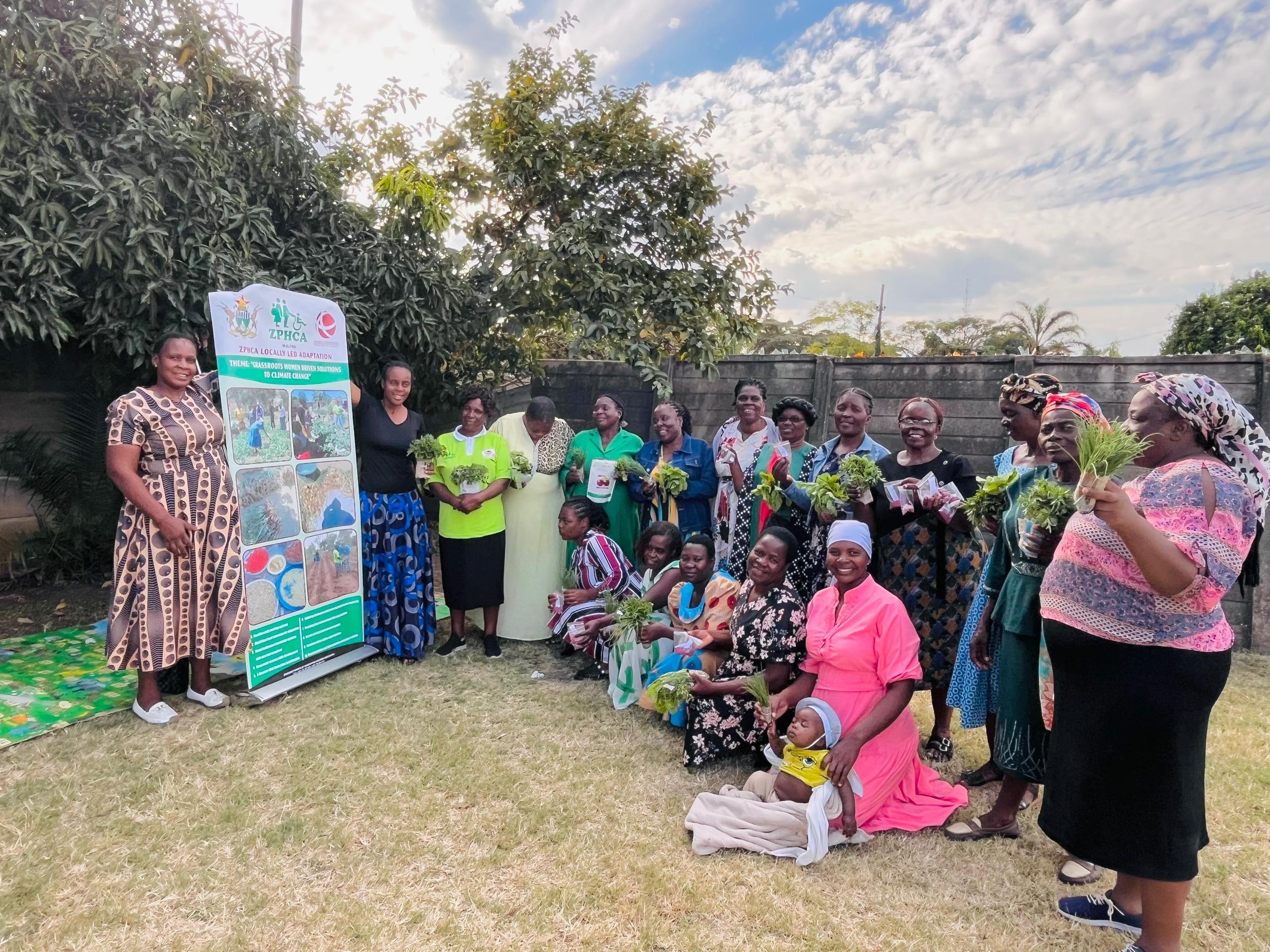
Families of Children with Disabilities are not spared from the adverse Impacts of Climate Change. Outside poverty, climate change remain the most significant challenge children with disabilities and their families are facing in urban and rural areas across the greater Harare Province. The majority of children with disabilities are on permanent medication depending on the severity of their disabilities and disability types. Routine medication uptake requires complimentary nutritional food otherwise medication becomes harmful. In addition, some children with disabilities require special diet meals, thus brining additional costs to the family. The majority of the families of children with disabilities are poor and lack household’s assets, livestock’s and diversified sources of income to fall back on in the wake of climate change induced droughts. Working with over 400 children with disabilities and their families in Harare Province, Zimbabwe Parents of Handicapped Children’s Association (ZPHCA) initiated Climate Change Local Led Adaptation Projects for the benefit of over 230 families of children with disabilities in Harare Province. Families of children with disabilities were mobilised through their established 10 Parental Support Groups of caregivers of children with disabilities and were supported to initiate their preferred Climate Change Livelihoods Project. ZPHCA organise training workshops for the livelihood project group members covering key concepts such as livelihoods projects management, local resources mobilisation, marketing and entrepreneurship and value addition practical training. In addition, support group members were given the opportunity to visit other successful climate change livelihoods projects undertaken by other organization as part of increasing their knowledge, information, skills and expertise in livelihoods projects management.
After capacitating the Livelihoods Projects Groups, ZPHCA procured and distributed inputs and small working tools to support the established livelihoods projects groups. To date, 10 Climate Change Livelihoods Support Groups have been established in communities such as Mbare, Tanaka, Retreat, Epworth, Mabvuku, St Mary’s, Dzivaresekwa, Hopely, Mufakosi and Seke. The groups were supported with vegetable seeds, organic manure, day old chicks, peanut butter making machines, peanuts, packaging materials, water harvesting equipment and poultry feeds amongst other support facilities. Amongst other project implemented includes organic gardening, kitchen garden, broiler production, vegetable and fruit drying, layers production, indigenous chicken, peanut butter making and mauyu coffee making projects.
The climate change livelihoods projects have gone a long way in improving food security and income security for over 230 families of children with disabilities. Group members are able to sale their proceeds to the local markets and share the profits while a portion of the sales revenue is re-invested back into the project for continuity and sustainability. Nutritional security for children with disabilities has significantly improved as group members are also sharing their produce for family consumption. Group members are gaining new livelihoods project management skills awhile other are now replicating the knowledge and experience gained by initiating their own family projects. The livelihoods projects have improved household income while also improving availability of food products at community level thus making a contribution towards local economic performance.
Livelihood Project Group Leaders receives inputs after attending a Gardening training workshop in Harare (ZPHCA, 2026)
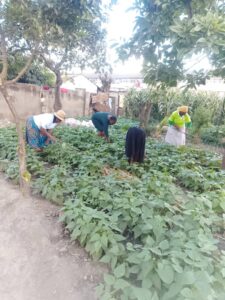
Mbare Livelihood Group Members working on their Garden (ZPHCA, 2026)
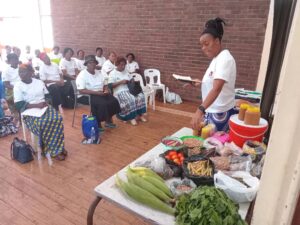
ZPHCA Livelihoods Projects members showcasing their Projects Produce during a Peer Exchange Project at Waterfalls Hall (ZPHCA, 2026)